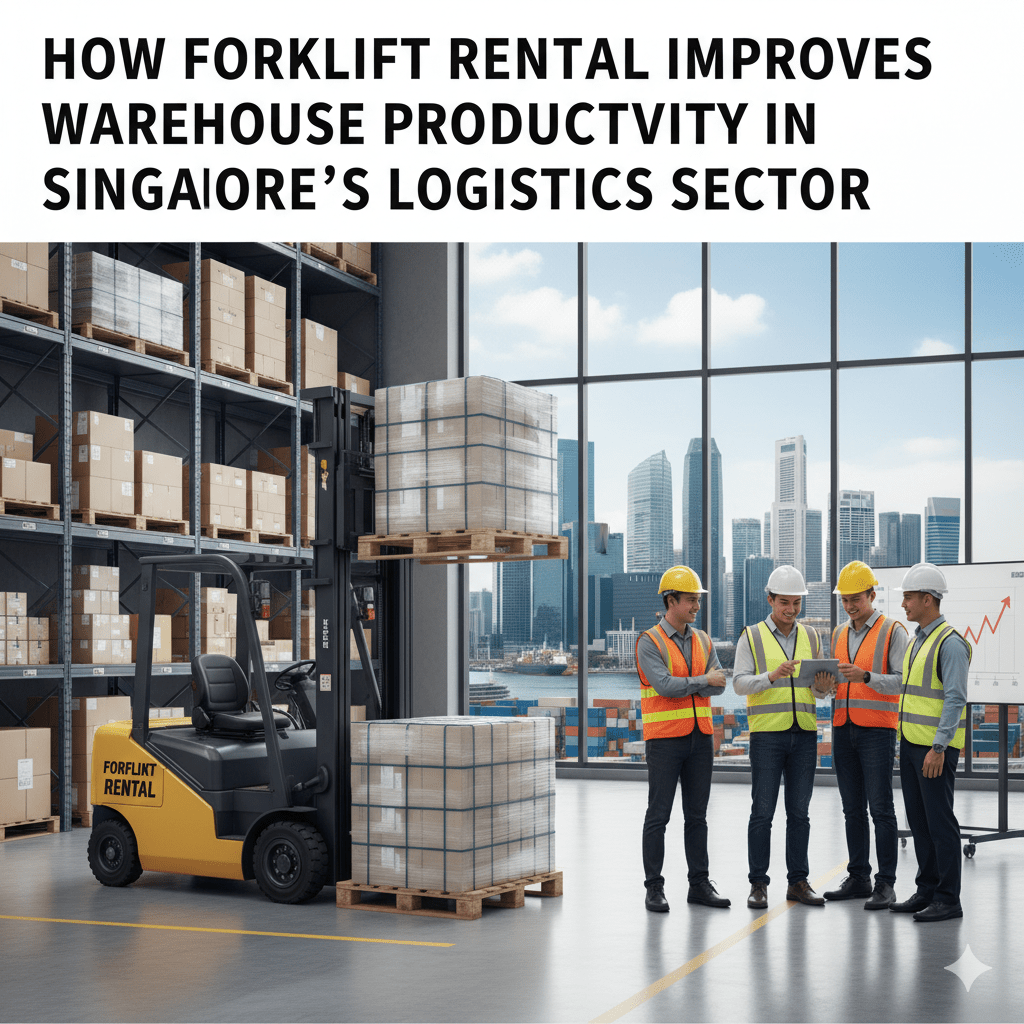
In the fast-paced logistics and warehousing landscape of Singapore, efficiency is the currency of success. At the heart of this efficiency is a piece of equipment we often take for granted: the forklift. However, choosing the wrong capacity can lead to a cascade of problems, from safety hazards and damaged goods to plummeting productivity. Whether you are considering a new purchase or exploring forklift rental options, understanding how to calculate the correct capacity is a non-negotiable first step.
This guide will walk you through the key factors to ensure you select a forklift that is not just available, but perfectly suited to your unique operational demands.
Understanding the Basics: It’s More Than Just a Number
The rated capacity of a forklift, found on its data plate, is the maximum weight it can lift to a specific height at a specific load centre. The most common misconception is that a 2-tonne forklift can lift 2 tonnes under any condition. This is not true. Capacity is dramatically affected by the load’s dimensions and the height to which it is lifted.
The load centre is the horizontal distance from the forklift’s forks to the load’s centre of gravity. A standard palletised load is often calculated with a 24-inch load centre. If your load is longer or irregularly shaped (e.g., a long pipe or a large machine part), the effective load centre shifts, reducing the forklift’s safe lifting capacity.
A Step-by-Step Guide to Calculating Your Needs
1. Determine Your Typical Load Weight
This is your starting point. Weigh your most common unit loads. Don’t just look at the maximum; calculate the average. If you handle everything from 800kg cartons to 1.5-tonne machinery, your forklift rental services provider needs to know the upper limit to recommend a suitable model. Remember to include the weight of the pallet or any attachments in your calculation.
2. Analyse Your Load Dimensions and Centre of Gravity
Measure the length, width, and height of your typical loads. Identify where the centre of gravity lies. For non-uniform loads, this is critical. A forklift rated for 1.5 tonnes at a 24-inch load centre might only safely lift 1 tonne at a 36-inch load centre. Providing these details to a forklift rental service Singapore expert will prevent you from renting an underpowered truck.
3. Consider the Required Lift Height
Capacity decreases as lift height increases due to stability physics. You need a forklift whose capacity at your maximum working height still exceeds your load weight. If you need to stack 1.4-tonne pallets at a height of 6 metres, a basic 1.5-tonne forklift may be insufficient. This is a key discussion point when arranging an electric forklift rental, as their stability characteristics can differ from internal combustion models.
4. Evaluate Your Working Environment
The concrete-floored, wide-aisle environment of a port terminal is vastly different from a compact, multi-level racking warehouse.
- For Wide Areas: Standard counterbalance forklifts from a general forklift truck rental fleet are often sufficient.
- For Narrow Aisles: This is where specialised equipment shines. A reach truck rental Singapore is designed specifically for high-density storage, offering superior height capability in tight spaces without sacrificing capacity. Choosing the right type is as important as the capacity itself.
5. Factor in Attachments
Do you use drum handlers, carton clamps, or rotators? Forklift attachments can significantly alter the machine’s dynamics and reduce its effective capacity. They add weight and can shift the load centre forward. Always inform your forklift rental company about any attachments you plan to use so they can de-rate the capacity accordingly and provide a truck that is still powerful enough for the job.
The Singapore-Specific Advantage: The Flexibility of Rental
For many businesses in Singapore, where space is at a premium and operational needs can shift rapidly, the flexibility of a forklift rental Singapore is a strategic advantage. You are not locked into a single capacity.
Perhaps your business has seasonal peaks. During a year-end surge, you might need a high-capacity electric forklift rental Singapore for a three-month project, while your standard operations require smaller machines. A rental model allows you to scale your equipment fleet up or down with demand, ensuring you always have the right capacity without the capital expenditure.
Furthermore, with the Singapore government’s push towards a greener economy, opting for an electric forklift rental is not only environmentally friendly but also cost-effective for indoor operations, eliminating fumes and reducing noise pollution.
Making the Final Decision
Once you have gathered all this data, you are equipped to make an informed choice. The equation is simple: Your required capacity must be less than the forklift’s rated capacity at your specific load centre and maximum working height.
The most prudent step is to partner with a reputable provider of forklift rental services. A seasoned consultant won’t just hand you a key; they will conduct a site assessment, analyse your loads, and recommend the most efficient and safe solution—be it a standard forklift truck rental, a specialised reach truck rental Singapore, or a quiet electric forklift.
Calculating the right forklift capacity is a blend of science and practical understanding of your own operations. By taking a meticulous, data-driven approach, you ensure safety, protect your inventory, and maximise productivity, keeping your Singapore business moving smoothly and efficiently forward.
 Paves Asia Pacific
Leave a comment