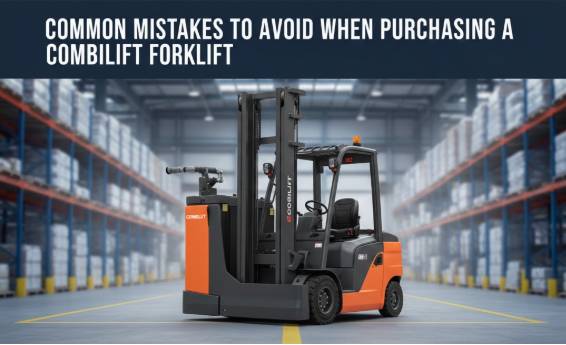
The search for a Combilift forklift for sale is more than just a transaction; it’s a strategic decision to solve complex space and handling challenges. As a digital marketing expert who has spent a decade analyzing the industrial equipment buyer’s journey, I’ve witnessed countless companies make the same costly errors.
A Combilift is a premium, engineered solution for narrow aisles and long loads, but a misstep in the purchasing process can negate its innovative benefits. This guide will steer you clear of the most common pitfalls, ensuring your investment delivers maximum efficiency and ROI.
Mistake #1: Prioritizing Price Over Purpose in Your Combilift for Sale Search
The most common error is focusing solely on the sticker price of a combi forklift for sale. Combilifts are not commodity items; they are highly configurable machines. A model that’s $5,000 cheaper but has the wrong mast height, capacity, or tire type for your specific application is a net loss. Before even browsing listings, conduct an internal audit: What are the exact dimensions of your longest loads?
What is the minimum aisle width you need to achieve? What are your floor conditions? Let these operational requirements, not an attractive price tag, dictate your search parameters for the right combilift for sale.
Mistake #2: Ignoring the Total Cost of Ownership (TCO)
The purchase price is just the entry point. Intelligent buyers evaluate the TCO over a 5-10 year horizon. For a Combilift forklift for sale, this includes:
- Energy Consumption: Electric vs. IC engine models have vastly different fuel/power costs.
- Maintenance Complexity: Combilifts’ unique multi-directional technology requires specialized knowledge. Factor in the cost and availability of authorized service.
- Downtime Costs: A cheaper, unreliable machine or one with poor dealer support can cripple your operation.
Always request estimated maintenance schedules and compare warranty terms. A higher upfront cost for a newer, well-supported model often results in a lower TCO.
Mistake #3:Overlooking a Comprehensive Site Assessment
Assuming a combi lifts for sale will “probably fit” is a recipe for disaster. You must conduct a thorough site assessment before purchasing. This goes beyond aisle width. Measure:
- Overhead Clearances: Include lighting, sprinklers, and ductwork.
- Doorways and Entry Points: Can the machine enter and exit all necessary areas?
- Floor Load Capacity and Condition: Combilifts concentrate weight differently. Ensure your floors can handle the point loads, especially for heavy-duty models.
- Traffic Patterns: How will it integrate with other vehicles and pedestrian traffic?
Many authorized dealers offer free site surveys—an invaluable service that prevents a catastrophic mismatch.
Mistake #4: Neglecting Dealer Credentials and Support
Not all dealers are created equal. When you find a promising Combilift forklift for sale, investigate the seller with the same rigor you would the machine.
- Are They Authorized? An authorized dealer has direct factory training, access to genuine parts, and official technical support.
- What is Their Service Reach? Do they have mobile technicians who can come to you? What is their average response time?
- Do They Offer Demonstrations? A reputable dealer should insist on a demonstration with your actual loads, in your facility. Avoid sellers who refuse this.
Your relationship with the dealer is a long-term partnership crucial for uptime.
Mistake #5: Failing to Verify Machine History (For Used Purchases)
The used market for combi forklift for sale can offer great value, but it requires due diligence. “As-is” should be a red flag. Demand:
Inspection by a Third Party: Hire an independent, Combilift-certified mechanic to perform a pre-purchase inspection. The cost is minor compared to uncovering major hidden repairs post-sale.
Full Service History: A complete log is more valuable than a low-hour meter reading. Scrutinize records for the MD system, mast, and hydraulics.
Reason for Sale: Understand the context. Is it a strategic fleet upgrade, or is the company offloading a problematic machine?
Mistake #6: Underestimating the Importance of Operator Training
Your operation will evolve. Are you purchasing a machine for today’s needs only? Consider potential future requirements:
- Will your load dimensions or weights increase?
- Are you planning facility expansions or layout changes?
- Could you benefit from additional attachments later?
Discuss scalability with your dealer. Sometimes, a slightly more capable or configurable model from the current combi lifts for sale inventory is a smarter long-term investment than the bare-minimum option.
Read More : Lithium-Ion vs Lead-Acid Battery Electric Forklifts: Which Is Better?
Conclusion: Purchase with Precision
Navigating the market for a Combilift forklift for sale demands a shift from a transactional mindset to a strategic one. By avoiding these seven mistakes—from fixating on price to neglecting dealer support—you transform from a mere buyer into an intelligent asset manager.
Remember, the goal isn’t just to purchase a machine; it’s to acquire a seamless, productive, and safe material handling solution. Do your homework, partner with an authorized expert, and let operational data drive your decision. Your bottom line will thank you for years to come.
 Paves Asia Pacific
Leave a comment