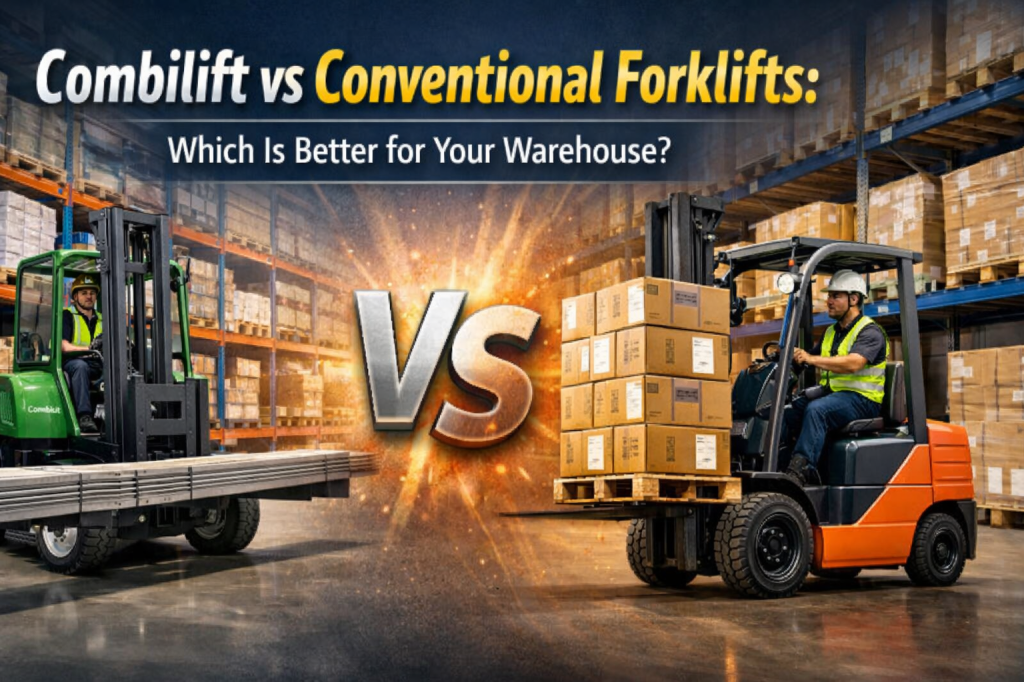
When optimizing a warehouse for efficiency, the debate between specialized and general material handling equipment often begins with a single question: Should you invest in a multidirectional Combilift or stick with a standard forklift truck for sale? While conventional forklifts have dominated the industry for decades, Combilift has revolutionized how we handle long loads and narrow aisles.
If you are currently searching for combilift forklift for sale, you have likely noticed the significant price difference between Combilift units and traditional counterbalance models. This article breaks down the functional, financial, and spatial differences to help you decide which investment yields the best ROI for your specific application.
The Fundamental Design Difference
A conventional forklift operates like a car: it moves forward, backward, and turns via its rear wheels. It requires substantial aisle width—typically 11 to 14 feet—to turn a right angle with a loaded pallet. Combilift, however, utilizes multi-directional technology.
Its wheels rotate 90 degrees, allowing the truck to move sideways while carrying long materials like timber, pipes, or sheet metal. This single feature changes the entire geometry of warehouse storage.
Space Utilization: The Combilift Advantage
Real estate is the most expensive aspect of any warehouse. If you are paying for square footage, you need to maximize every inch.
Conventional Forklifts require wide turning radii. This forces warehouses to dedicate 40% to 50% of their floor space to aisles rather than storage. If you handle 20-foot steel beams, a standard forklift requires you to “saw horse” or store materials in external yards.
Combilift eliminates this waste. Because the truck travels sideways with the load oriented in the direction of travel, it can operate in aisles as narrow as 80 inches. Warehouses that switch to Combilift often increase storage capacity by 30% to 50% without expanding their physical footprint. If maximizing density is your primary goal, Combilift is objectively superior.
Load Capacity and Handling
Conventional forklifts excel at standard pallet handling. If your operation moves 48×40-inch pallets of consumer goods, a standard counterbalance or reach truck is likely the most cost-effective solution.
However, Combilift was designed specifically for challenging loads. If you handle long, awkward, or oversized materials, a standard truck is dangerous. It requires the operator to crane their neck to see around the load, leading to blind spots and product damage. Combilift allows the operator to sit facing forward while the load travels parallel to the truck. This visibility drastically reduces accident rates and material waste.
Total Cost of Ownership
When evaluating a Combilift forklifts price, the sticker shock is real. A new Combilift can cost 1.5 to 2 times more than a comparable capacity IC engine forklift. However, price is not the same as cost.
Conventional: Lower upfront investment. Parts are ubiquitous. Any mechanic can repair them. However, they consume more fuel (or battery power) per shift due to the constant turning and maneuvering required.
Combilift: Higher initial investment. Specialized parts require trained technicians. However, you save tens of thousands annually in warehouse rent because you need less space. You also save on product damage claims.
If you are looking for a New Combilift forklift, be prepared for a premium price, but recognize that the payback period is often under 24 months purely from space savings.
Used Market Considerations
Budget constraints are real. If a new unit is out of reach, searching for a Used Combilift forklift for sale is a viable strategy. Unlike standard forklifts, Combilifts hold their value exceptionally well. The multi-directional gearbox and unique steering axles are robust, and these machines often run 20,000+ hours with proper maintenance.
When browsing forklifts for sale, be cautious of high-hour Combilifts that have been used in foundries or corrosive environments. Rust on the wheel motors is a red flag. For conventional trucks, the used market is flooded with options, but they depreciate faster. A five-year-old Combilift often retains 60% of its value, whereas a standard truck might retain only 40%.
Where to Find a Quality Combilift Forklift for Sale
Sourcing the right equipment is just as important as choosing the right model. When you are ready to Buy Combilift forklift equipment, you need a supplier with verified inventory and transparent history.
Paves has established itself as a reliable channel for material handling solutions. Whether you require a Combilift diesel forklift for sale for heavy outdoor timber handling or a Combilift electric forklift for sale for indoor cold storage applications, working with an experienced Combilift forklift supplier ensures you receive a machine that matches your load capacity and duty cycle requirements.
It is essential to verify whether the unit is a genuine Combilift (manufactured in Monaghan, Ireland) versus a generic Asian multi-directional copy. Genuine Combilift units offer superior parts availability and residual value.
Environmental and Operational Factors
The shift toward sustainability is influencing purchasing decisions. If your facility is moving toward lithium-ion power, a Combilift electric forklift for sale offers zero emissions and near-silent operation, making it suitable for food processing and pharmaceutical warehouses. Conversely, if you are operating in a rough, uneven yard, a Combilift diesel forklift for sale provides the torque and ground clearance necessary for lumber yards or steel service centers.
Conventional forklifts offer both electric and ICE options, but they cannot match the space efficiency of Combilift in dense storage scenarios.
Frequently Asked Questions
1. Is Combilift cheaper than a regular forklift?
No. The Combilift forklifts price is generally higher than a standard counterbalance truck of similar capacity. However, the total cost of ownership is often lower due to warehouse space savings and reduced product damage.
2. Can Combilift handle standard pallets?
Yes. While Combilift excels at long loads, it can handle standard pallets. However, for pure pallet work, a standard forklift or reach truck is usually more efficient and less expensive.
3. How long do Combilift forklifts last?
With proper maintenance, Combilift diesel and electric models frequently exceed 15,000 to 20,000 hours of operation. The multi-directional mechanism is engineered for heavy industrial use.
4. Where can I find a Used Combilift forklift for sale?
Certified Combilift forklift supplier networks, including dealers like Paves, often list pre-owned certified units. Online marketplaces also list them, but verify service history before purchasing.
5. Do I need special training to operate a Combilift?
Yes. Combilift operation differs significantly from conventional trucks due to the sideways travel function. Operators require specific certification to maximize safety and efficiency.
6. Are Combilifts good for outdoor use?
Yes. Combilift diesel forklift for sale models are specifically designed for rough terrain and heavy outdoor applications like timber yards and block plants. Electric models are best suited for smooth indoor surfaces.
7. What is the narrowest aisle a Combilift can work in?
Depending on the model and load length, Combilift can operate in aisles as narrow as 2.1 meters (approximately 82 inches), which is impossible for a standard front-loading forklift.
8. Can I rent a Combilift before buying?
Yes. Many suppliers offer rental programs. This allows you to test the machine in your specific workflow before committing to Buy Combilift forklift equipment.
 Paves Asia Pacific
Leave a comment