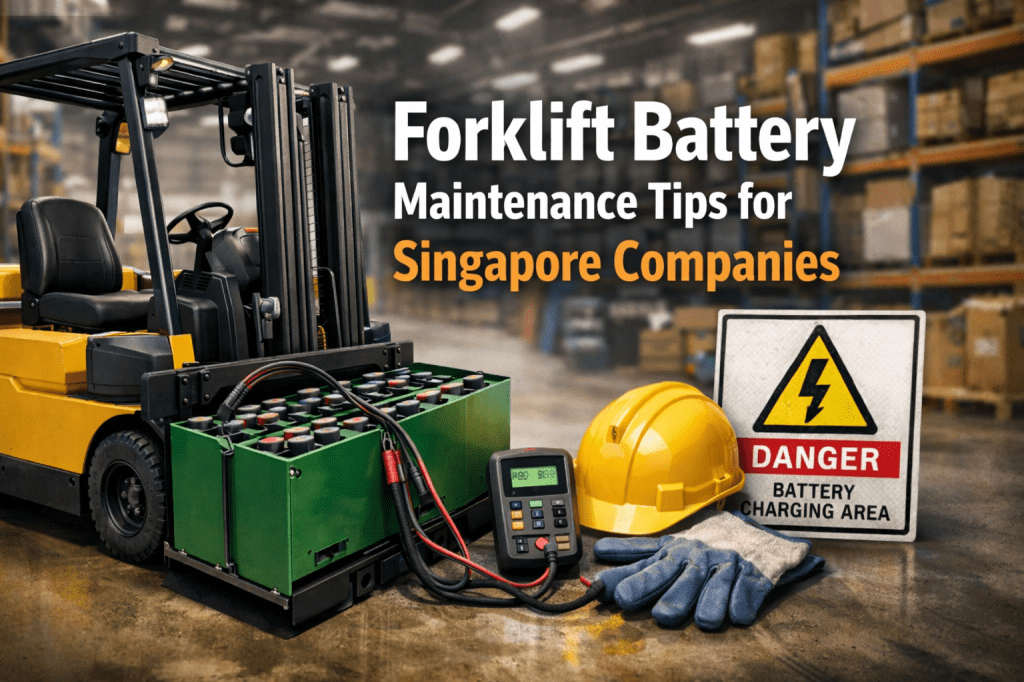
In the fast-paced logistics and warehousing environment of Singapore, your material handling equipment is the lifeblood of your operations. For companies managing projects that rely on a forklift Singapore fleet, the battery is the most critical and expensive component.
Whether you are running a multi-shift operation or managing a construction site, a dead battery means costly downtime. With Singapore’s unique tropical climate and high utilisation rates, simply owning a singapore forklift isn’t enough; you must master the art of battery care to protect your bottom line and ensure project timelines are met.
Paves understands the demands placed on equipment in this region. Proper maintenance not only extends battery life but also ensures safety and reliability. This guide provides actionable tips for companies looking at forklifts for sale or managing existing fleets, helping you navigate the challenges of battery management in the local context.
1. Master the Charging Cycle to Beat the Heat
Singapore’s ambient temperature is a battery’s worst enemy. Heat accelerates chemical reactions, which can lead to overcharging and grid corrosion. To combat this, you must adopt a strict charging discipline. Avoid deep discharges; try to recharge when the battery hits 30-40% capacity. For lead-acid batteries, never let them sit in a discharged state, as this causes sulfation, permanently reducing capacity.
When sourcing sg forklifts for your project, ensure you understand the charger specifications. Use only the manufacturer-recommended charger to prevent mismatched voltage and current, which can cause overheating. In multi-shift operations where used forklift singapore units are common, opportunity charging might seem tempting, but for lead-acid batteries, a full charge cycle is always preferable to frequent top-ups.
2. Watering and Cleaning: The First Line of Defence
Proper watering is essential, but timing is everything. For lead-acid batteries, always water after charging, not before. Charging causes the electrolyte to expand and bubble; if you fill it beforehand, the battery will overflow, creating a corrosive mess and losing acid concentration. Use only distilled water, as tap water contains minerals that contaminate the cells.
Furthermore, the cleanliness of your battery impacts its performance. Dust and grime can create a conductive path, leading to parasitic drains. Regularly clean the terminals with a mixture of baking soda and water to neutralise any acid residue. If you run a forklift company in Singapore, making cleanliness a standard operating procedure will drastically reduce electrical faults and terminal corrosion.
3. Adapt to Your Operational Intensity
Not all projects are the same, and neither are your batteries. If your operations involve heavy lifting for long hours, you need a battery with a higher ampere-hour (Ah) rating. Overworking a small battery in a high-intensity environment leads to overheating and premature failure.
Invest in a proper battery handling system if you are changing batteries frequently. Manual changes risk dropping and damaging these heavy assets. For those who recently purchased forklifts for sale with lithium-ion technology, the rules change slightly. Li-ion batteries handle opportunity charging better and don’t require watering, but they are sensitive to voltage and require compatible chargers to manage the Battery Management System (BMS).
4. Training and Safety Protocols
The best maintenance schedule fails without operator buy-in. Train your staff to engage in smooth operation—”jackrabbit” starts and abrupt stops drain the battery faster. They should also be vigilant about reporting damage to cables or the casing immediately.
Safety is paramount. Always ensure the charging area is well-ventilated to disperse hydrogen gas emitted during charging. No smoking or open flames should be allowed near charging stations. By enforcing these protocols, any forklift company in Singapore can reduce accident risks and equipment damage.
Conclusion
Battery maintenance is a critical aspect of project management in Singapore’s industrial sector. By implementing these tips, you protect your investment and ensure operational continuity.
Whether you are looking at the latest models or a reliable used forklift singapore, remember that a well-maintained battery is the key to unlocking your equipment’s full potential. Paves remains committed to supporting your operational needs with expert advice and quality equipment.
Frequently Asked Questions (FAQs)
1. How often should I water my forklift battery in Singapore?
Due to the heat, you should check electrolyte levels weekly. Top up with distilled water after charging, keeping the level just above the lead plates.
2. Can I use any charger for my sg forklifts?
No. Always use the charger specifically designed for your battery type (lead-acid or lithium-ion). Using the wrong charger can cause permanent damage and void warranties.
3. What is the ideal charging time for a singapore forklift?
A standard lead-acid battery typically requires 8 hours for a full charge and 8 hours to cool down. Lithium-ion batteries charge faster and have no cool-down requirement, making them ideal for multi-shift operations.
4. How long should a forklift battery last?
With proper maintenance, a lead-acid battery can last 1,500 charging cycles or about 5 years. Lithium-ion batteries can last significantly longer, often exceeding 3,000 cycles.
5. Where can I find quality used forklift singapore units with good batteries?
Look for reputable dealers who provide battery health reports. When viewing forklifts for sale, request a hydrometer test for lead-acid batteries to check the specific gravity of each cell, which indicates its charge and health.
 Paves Asia Pacific
Leave a comment