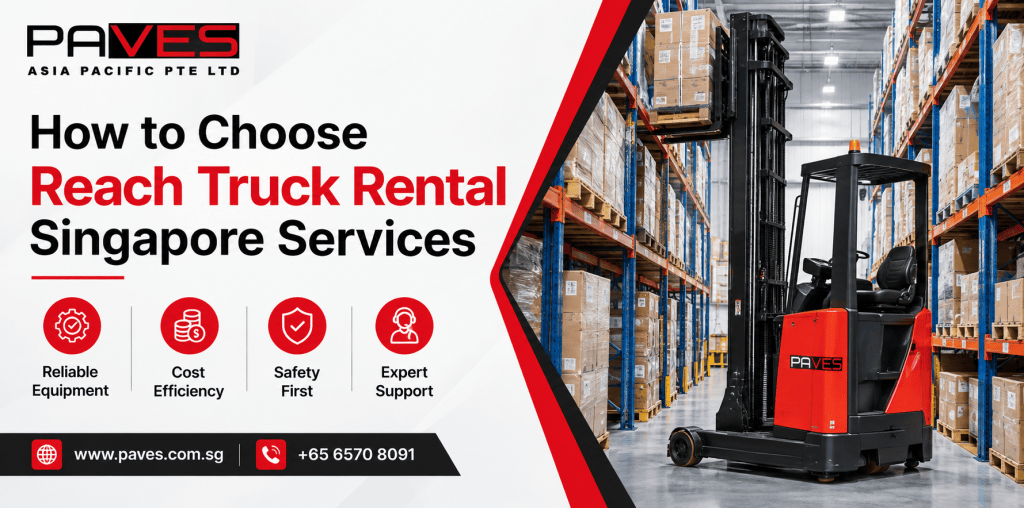
Reach trucks are designed for warehouse environments where space is limited and goods need to be lifted and stored at considerable heights. Their compact design and extended reach make them particularly useful for high-density storage systems.
A poorly selected truck, however, can create operational problems. For example, a truck with insufficient lifting capacity may not handle your pallets safely, while equipment that is too large for your aisles can reduce maneuverability.
The right rental solution should match the actual demands of your facility rather than simply providing the cheapest available machine.
When comparing reach truck rental singapore, consider both immediate operational requirements and longer-term efficiency. Reliable equipment can help reduce interruptions, improve material flow, and support safer warehouse operations.
1. Understand Your Warehouse Requirements
Start by identifying exactly how and where the truck will be used.
Consider questions such as:
- What type of pallets will be handled?
- What is the average pallet weight?
- How high must products be stored?
- How narrow are the warehouse aisles?
- How many hours will the truck operate each day?
- Will it operate indoors, outdoors, or in both environments?
- How frequently will pallets be moved?
These details help determine the appropriate truck specifications. For example, a warehouse with tall racking systems may require a reach truck with a higher lifting capacity and suitable mast configuration. A facility with particularly narrow aisles may need a compact model with excellent maneuverability.
Understanding these requirements before contacting a rental provider prevents you from paying for equipment that does not meet your operational needs.
2. Check the Required Lifting Capacity
Load capacity is one of the most important factors when selecting warehouse equipment. Never choose a truck based solely on the maximum weight you normally handle. Consider the heaviest loads, pallet dimensions, load center, and lifting height involved in your operations.
The capacity of a forklift can change depending on how high the load is lifted and how the load is positioned. Therefore, the rated capacity should be checked against your actual working conditions.
A professional rental provider should be able to explain the truck’s capacity specifications and recommend an appropriate model.
Choosing equipment with sufficient capacity helps support safe and efficient material handling while reducing the risk of overloading.
3. Consider Lift Height and Mast Configuration
Warehouse storage systems often make use of vertical space. If your facility has high-level pallet racking, lift height becomes a critical consideration.
Measure the highest storage position and allow enough clearance for safe pallet placement and retrieval.
Different mast configurations can provide different operating capabilities. Your supplier should help you identify equipment that can reach the required height while remaining suitable for the available ceiling clearance.
It is also important to consider obstructions such as lighting fixtures, sprinkler systems, beams, and warehouse doors.
A truck that technically reaches the required height may still be unsuitable if it cannot operate safely within the physical restrictions of your facility.
4. Measure Your Warehouse Aisle Width
One of the main advantages of reach trucks is their suitability for relatively narrow warehouse aisles. However, not every model offers the same maneuverability.
Before selecting equipment, measure the actual aisle width and compare it with the manufacturer’s turning and operating requirements.
Pay attention to:
- Aisle width
- Rack configuration
- Turning radius
- Pallet dimensions
- Floor conditions
- Pedestrian movement
- Obstacles and restricted areas
If your warehouse has narrow aisles, choosing the right truck dimensions can make a significant difference to productivity.
A properly matched truck allows operators to retrieve and store pallets more efficiently without unnecessary maneuvering.
5. Evaluate Electric Reach Truck Options
Electric reach trucks are widely used for indoor warehouse applications because they operate without direct exhaust emissions and can provide relatively quiet operation.
When considering electric reach truck rental Singapore, examine more than just the truck itself. Battery condition, charging requirements, operating hours, and charging infrastructure should also be assessed.
Ask the rental provider:
- What is the battery’s condition?
- How long can it operate on a typical charge?
- Is a charger included?
- How long does charging take?
- Is an additional battery available?
- What happens if the battery fails during operation?
For facilities operating multiple shifts, battery availability can become particularly important. A rental solution should support your operating schedule rather than create charging-related downtime.
6. Compare Rental Duration and Pricing
Rental requirements can vary considerably between businesses. Some warehouses need equipment for a short-term project, while others may require machines for several months or longer.
Compare pricing according to your actual rental period. Short-term rentals may provide flexibility, while longer agreements can sometimes offer different commercial terms. However, avoid selecting a provider based only on the advertised daily or monthly rate.
Check whether the quoted price includes:
- Equipment delivery
- Collection
- Maintenance
- Repairs
- Battery or charger
- Replacement equipment
- Operator training
- Additional service charges
A transparent quotation makes it easier to calculate the actual cost of the rental.
7. Inspect Equipment Condition
Equipment condition directly affects reliability and workplace safety. Before accepting a rental truck, inspect its general condition. Look at the tires, forks, mast, chains, controls, battery, warning systems, lights, brakes, and other important components.
Ask whether the truck has undergone regular maintenance and inspection. A reputable rental provider should be willing to explain the equipment’s service history and maintenance arrangements.
Older equipment is not automatically unsuitable, but it should be properly maintained and capable of performing the required work safely.
For businesses comparing rental providers, equipment condition can be just as important as the quoted rental price.
8. Ask About Maintenance and Breakdown Support
Unexpected equipment downtime can disrupt warehouse operations. Therefore, technical support should be an important part of your rental decision. Ask the provider what happens if the truck develops a fault during the rental period.
Important questions include:
- How quickly is technical support available?
- Is routine maintenance included?
- Who handles repairs?
- Is replacement equipment available?
- Is emergency support provided?
- Are service technicians locally available?
A provider with responsive maintenance support can help minimize operational interruptions. When comparing reach forklift rental Singapore options, consider the complete service package rather than evaluating the equipment price alone.
9. Prioritize Safety Features
Warehouse equipment should support safe material handling. Check whether the truck includes appropriate safety features such as:
- Operator visibility features
- Warning alarms
- Safety lights
- Reliable braking systems
- Load capacity indicators
- Stable mast operation
- Emergency controls
- Ergonomic operator controls
Operators should also understand the truck’s controls and operating limitations. The rental company should provide appropriate documentation and explain equipment requirements. Your own workplace safety procedures should also be followed consistently.
A well-maintained truck combined with properly trained operators can contribute to safer warehouse operations.
10. Review the Rental Agreement Carefully
Before confirming the rental, read the agreement carefully. Look for information regarding:
- Rental period
- Payment terms
- Deposit requirements
- Maintenance responsibilities
- Damage responsibilities
- Insurance requirements
- Delivery and collection
- Breakdown support
- Early termination
- Replacement equipment
- Additional charges
Ask questions about anything that is unclear. A detailed agreement helps both parties understand their responsibilities and reduces the possibility of unexpected disputes later.
Do not assume that every rental provider offers the same terms. Compare agreements alongside equipment specifications and service quality.
11. Evaluate the Rental Company’s Reputation
Experience and reliability can make a major difference when renting material-handling equipment.
Look for a provider with suitable equipment, clear communication, responsive customer service, and a strong understanding of warehouse operations.
You can also evaluate:
- Customer reviews
- Equipment range
- Service responsiveness
- Maintenance capabilities
- Rental flexibility
- Technical expertise
- Availability of replacement machines
A supplier that understands your operational requirements can often recommend equipment more effectively than a provider focused only on completing a rental transaction.
Paves Asia Pacific provides reach truck rental solutions designed around practical warehouse requirements, helping businesses evaluate equipment based on capacity, operating conditions, and rental needs.
12. Consider Delivery and Collection Services
Getting the right equipment is only part of the rental process. You should also consider how the machine will arrive at your facility. Ask the provider about transportation arrangements, delivery timing, access requirements, and collection procedures.
If your warehouse operates on a tight schedule, delayed delivery can affect productivity. Confirm the agreed delivery date and make sure the site is ready to receive the equipment. It is also useful to understand whether transportation charges are included in the rental quotation or billed separately.
13. Match the Truck to Your Workload
Rental decisions should reflect actual workload rather than assumptions. If your warehouse handles pallets continuously throughout multiple shifts, equipment durability and battery performance may be particularly important.
For occasional pallet movement, a different rental arrangement may be more appropriate.
Think about:
Low workload:
Prioritize flexibility and cost-effective rental terms.
Regular warehouse operations:
Focus on reliability, maintenance, and operating efficiency.
Heavy or multi-shift operations:
Pay particular attention to durability, battery capacity, servicing, and replacement equipment. This approach helps ensure that your rental investment matches your operational requirements.
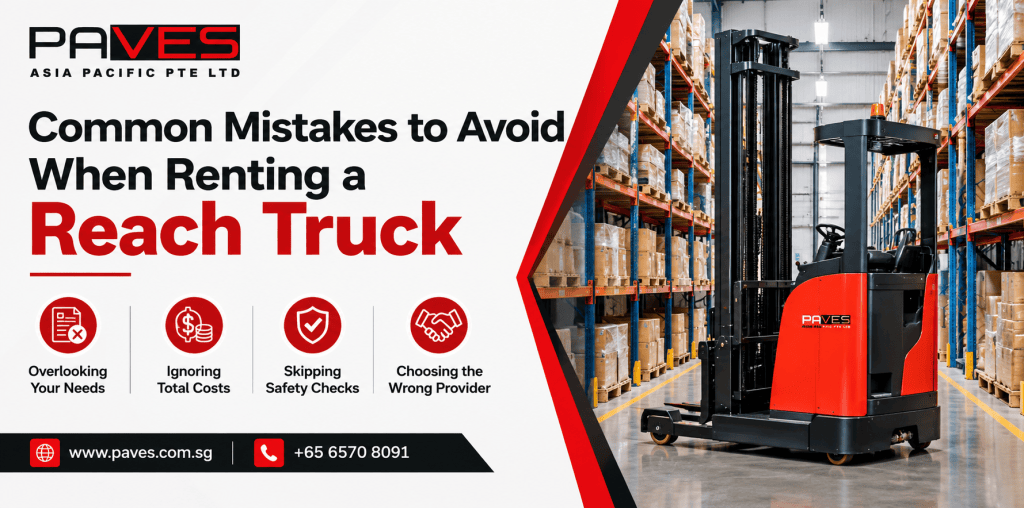
Common Mistakes to Avoid When Renting a Reach Truck
Businesses can sometimes focus too heavily on rental price and overlook other important factors.
Avoid these common mistakes:
Choosing Based Only on Price
The cheapest truck may not offer the capacity, reliability, or support your warehouse requires.
Ignoring Aisle Dimensions
A truck that cannot maneuver comfortably within your aisles can reduce productivity and increase operational risks.
Not Checking Equipment Condition
Always verify the truck’s maintenance condition before accepting it.
Overlooking Battery Requirements
Electric equipment needs suitable charging arrangements and battery support.
Failing to Review Contract Terms
Unexpected fees and unclear maintenance responsibilities can increase total rental costs.
Not Planning for Downtime
Ask what happens if the equipment becomes unavailable during your rental period.
Questions to Ask Before Choosing a Rental Provider
Before signing an agreement, ask:
What capacity does the truck have?
Confirm that its rated capacity suits your pallet weights and lifting requirements.
What is the maximum lifting height?
Make sure it matches your highest storage position.
Is the truck suitable for my aisle width?
Verify maneuverability based on your actual warehouse dimensions.
What is included in the rental price?
Clarify maintenance, delivery, collection, battery, charger, and service costs.
What happens during a breakdown?
Understand response times and replacement arrangements.
Is the equipment regularly maintained?
Request information about inspections and servicing.
These questions can help you compare suppliers more effectively.
Final Checklist for Selecting Reach Truck Rental Services
Before making your decision, check the following:
- Load capacity matches your requirements
- Lift height suits your warehouse racking
- Truck dimensions fit your aisles
- Battery performance supports your work schedule
- Equipment has been properly maintained
- Safety features are functional
- Rental pricing is transparent
- Maintenance support is available
- Breakdown arrangements are clear
- Delivery and collection terms are confirmed
- Contract conditions are understood
- Supplier has suitable experience
Taking time to evaluate these factors can help you select equipment that supports productivity, safety, and operational continuity.
Conclusion
Selecting the right warehouse equipment requires more than comparing rental prices. You need to consider your warehouse layout, pallet weights, lifting heights, aisle dimensions, operating schedule, equipment condition, safety requirements, and technical support.
A reliable reach truck rental Singapore solution should provide equipment that fits your application while offering transparent commercial terms and dependable service. Evaluating these factors before signing an agreement can help reduce downtime, improve warehouse efficiency, and support safer material handling.
The goal is not simply to rent a truck but to choose equipment and service support that align with the way your warehouse actually operates.
For More Details :
Contact No : +65 6570 8091
E – Mail : sales@paves.com.sg
FAQs
What should I consider when choosing a reach truck rental?
Consider load capacity, lifting height, aisle width, operating hours, equipment condition, battery performance, rental cost, maintenance support, and safety features.
Is an electric reach truck suitable for warehouses?
Yes. Electric reach trucks are commonly suitable for indoor warehouse operations where low-noise operation and zero direct exhaust emissions are desirable.
How do I select the correct reach forklift?
Match the truck’s rated capacity, lift height, dimensions, turning requirements, and operating conditions with your warehouse’s actual requirements.
What should be included in reach truck rental services?
Depending on the provider, services may include equipment delivery, collection, maintenance, repairs, technical support, battery and charger provision, and replacement equipment.
Why is aisle width important when renting a reach truck?
Aisle width affects maneuverability and pallet-handling efficiency. The truck should be able to turn and position loads safely within the available operating space.
How can I reduce unexpected rental costs?
Request a detailed quotation and confirm whether transportation, maintenance, repairs, batteries, chargers, and other service charges are included.


Leave a comment